
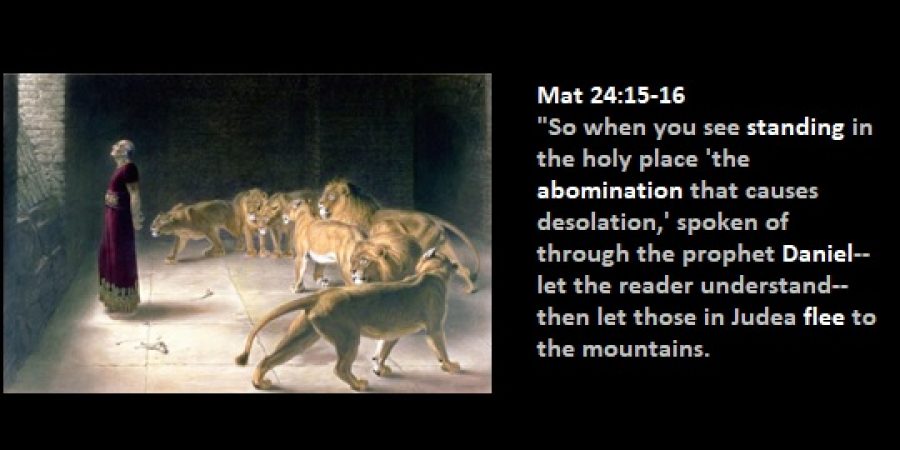
The book of Daniel was traditionally thought to have been written by a man named Daniel who was one of the Israelites exiled to Babylon during the reign of Jehoiakim king of Judah probably around 609 BC.
Many modern Bible scholars have dismissed that idea believing instead that it was actually written by an anonymous author around 167 BC during Antiochus IV Epiphanes reign over the area that included Jerusalem. One of the primary reasons for their conclusion comes from chapter 11 in the book of Daniel. When comparing generally accepted secular histories to chapter 11, the verses prior to Dan 11:40 seem to be remarkably accurate descriptions of the reign of Antiochus IV Epiphanes up to that point even though his name is never mentioned. Comparing those histories to Dan 11:40-45, the description of a war with Egypt (40-43) and his death (44-45), they do not match.
I disagree with modern scholarship on this point. It seems to me that a book written by an anonymous author claiming to be Daniel is a book based on a lie. Jesus is quoted in John 17:17 as saying “your word is truth”. I can’t see God allowing a book based on a lie being included in scripture.
I don’t have any problem with Dan 11:40-45 for several reasons. First, secular histories are not always right. There are often several sources that claim to describe any given event in history and those sources don’t always agree. Most historians follow generally accepted guidelines on how to decide which source or sources are the most accurate. Unfortunately, there is no guarantee that following those guidelines will always result in the truth. For me, if there is a difference between what a secular historian says happened and what the Bible says, I will always trust the Bible.
Second, the 11th chapter of Daniel does not claim to be a historical record but prophecy and prophecy is not always easy to interpret. Many prophecies have multiple meanings. I can offer here a couple of examples.
My first example is from the 7th chapter of Isaiah. In that chapter king Ahaz of Judah is afraid because Aram and Ephraim have joined forces with the intent of defeating Judah and replacing Ahaz as king. God tells Isaiah to go tell Ahaz not to be afraid because it will not happen. Ahaz refuses to ask God for a sign but Isaiah is told to give him one anyway. The sign is in verses 14 – 16. “14 Therefore the Lord himself will give you a sign: The virgin will conceive and give birth to a son, and will call him Immanuel. 15 He will be eating curds and honey when he knows enough to reject the wrong and choose the right, 16 for before the boy knows enough to reject the wrong and choose the right, the land of the two kings you dread will be laid waste.” At the time that prophecy was proclaimed, everyone took it only as a description of a time frame for the destruction of Aram and Ephraim. It wasn’t until at least the annunciation of Gabriel to Mary (Luke 1:26-38) and maybe much later when the connection was made between verse 14 and the virgin birth of Christ. I can find no evidence that any of the Jewish scholars around that time that were looking for a virgin birth as a sign of the coming Messiah.
My second example is from the book of Daniel in his prophecy of the desecration of the temple that he calls “the abomination that causes desolation” (Daniel 9:27, 11:31, and 12:11). That prophecy is first of all interpreted to be a prediction of something that Antiochus IV Epiphanes eventually did, but in Mathew 24:14 Jesus reinterprets those verses as a prophecy of a yet future event. It is not clear to me whether Jesus was talking about something that would happen as a part of the Roman destruction of Jerusalem in 70 AD or if it is a still future event.
So as far as the discrepancy between secular histories and Daniel 11:40-45 is concerned, if may be that secular historians are wrong about those events or maybe we are to look for a different interpretation of what those verses really mean.
Some scholars doubt that Daniel was even a real person. I don’t buy that conjecture either. Ezekiel was a contemporary of Daniel, both having been exiled from Jerusalem to Babylon with Ezekiel arriving just a few years after Daniel. In the book of Ezekiel chapter 14, Daniel is mentioned twice by name (verses 14 and 20) and held up as an epitome of righteousness along with Noah and Job. It is apparent that Ezekiel knew of Daniel at least by reputation and maybe even personally. Also, in Mathew 24:14 Jesus quoted Daniel and called him a prophet. That further convinces me that he really existed and wrote the book of Daniel.
While Jews may not have considered Daniel as a prophet, (the book of Daniel appears in Jewish scripture in the section called the “Writings” rather than the section of the “Prophets”) Christians, Muslims, and those of the Bahai faith all count Daniel as a prophet. One reason Christians consider Daniel a prophet is because Jesus is quoted as calling him a prophet in Mathew 24:15.
Another thing that “scholars” like to cite to support late and anonymous authorship is that the canon of prophets in Hebrew scriptures was closed around 200 BC and the book of Daniel was not included. Also, the book, Wisdom of Sirach, a work dating from around 180 BC draws on every book of the Old Testament except Daniel.
I believe those facts are easily accounted for by the words in Daniel 12:4, “But you, Daniel, roll up and seal the words of the scroll until the time of the end.” I believe Daniel did as he was told and sealed up the scroll. It probably was not discovered and unsealed until around or after 200 BC.
There is plenty of evidence supporting both sides of this argument. No matter which side of it you choose to believe, no one, except God, can prove you wrong. For me, I will continue to believe that all of the Bible, including the book of Daniel is the inspired, infallible, inerrant word of God.